Hi @radar1
If you are working in FLOAT32 you can simply remove the constant and the multiplication by factor in the code. You will then get the actual float values in dB.
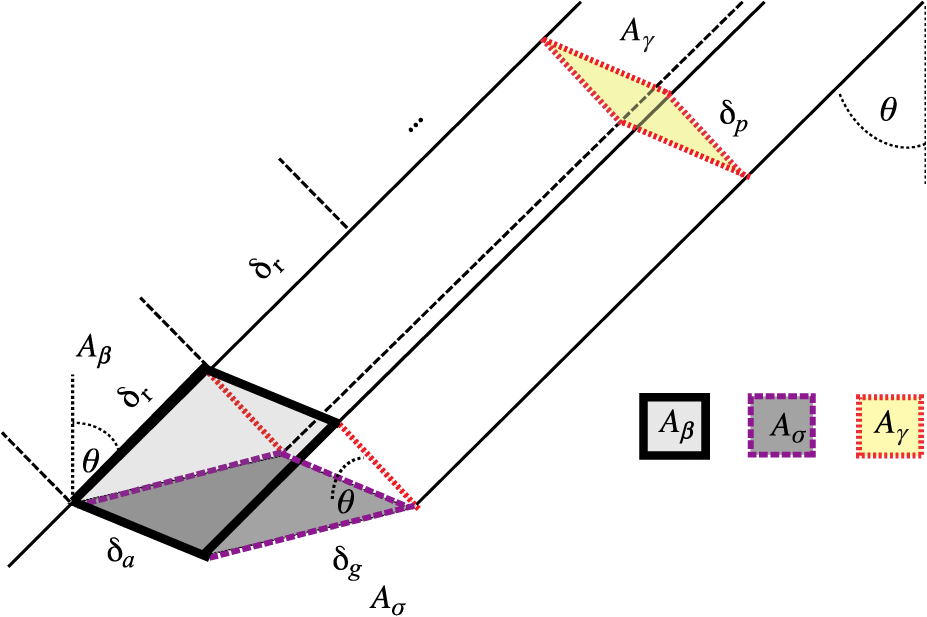
For the backscatter, it depends what quantity you need in your analysis. With Sentinel Hub, you can get β0, σ0, or γ0 which relate to the reference area used to normalise the backscatter. You can find out more about these products in this document (slides 34-36), or in ESA’s Sentinel-1 document library if you want to dig even deeper.
The figure below shows the different normalisation areas (source: Small, 2011):
I cannot really comment on the selection of orbit direction: it would be worth testing what produces the best results for your specific application.